
United Credit Cards in 2026: Which One Fits Your Travel Style?

PointsCrowd is a community-supported platform. When you apply for a credit card, make an order, or otherwise interact with the advertisers through the links on this page we may earn an affiliate commission. This helps us maintain and develop the platform further at no cost to you.
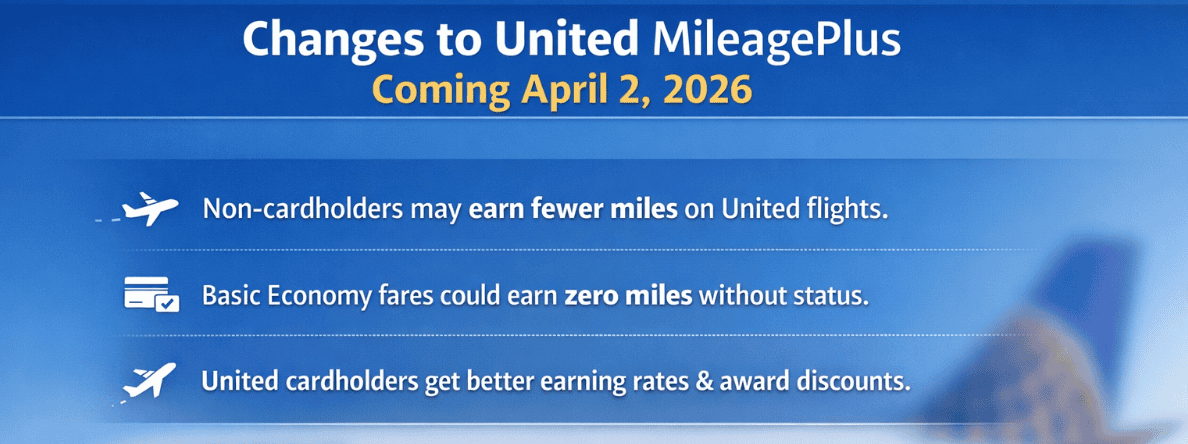
United’s co-branded cards have always been about bags, boarding, and lounge access. But in 2026, they also became a lever inside MileagePlus itself: starting April 2, 2026, United gives eligible cardmembers (1) higher flight mile-earning rates and (2) automatic award price discounts when booking United-operated awards with miles.
Separately, beginning January 1, 2026, Premier 1K members can also earn additional PlusPoints based on PQP earned through eligible United credit card spending.
Below is a complete, publication-ready guide to the currently available Chase-issued United cards—4 personal + 2 business—with comparison tables and clear “who it’s for” picks.
The 2026 MileagePlus Shift (Why These Cards Matter More Now)
Starting January 1, 2026:
- Premier 1K members earn 20 PlusPoints per 3,000 PQP beyond 22,000, and eligible credit-card PQP now counts toward that “extra PlusPoints” track.
Starting April 2, 2026 (tickets issued on/after):
- United’s “miles per $” from flying becomes cardmember vs. non-cardmember (example: general members earn 3x without a card vs 6x with an eligible card).
- Eligible cardmembers get at least 10% off United-operated award flights booked with miles; if you also have Premier status, it’s at least 15% off.
United Personal Cards
| Card (official link) | Annual fee | Current public welcome offer* | Best headline perks | PQP from spend | Lounge access |
|---|---|---|---|---|---|
| United Gateway Card | $0 | 30,000 miles (see page)* | 25% back on inflight + Club premium drinks; “earned” checked bag certificates after spend; Cardmember Award Pricing after $10k spend | — | — |
| United Explorer Card | $0 first year, then $150 | 70,000 miles (see page)* | 1st checked bag free; priority boarding; 2 United Club one-time passes; $500+ partner credits | Limited (see terms) | 2 one-time passes/year |
| United Quest Card | (See page) | 80,000 miles + 3,000 PQP (see page)* | $200 United credit; 10,000-mile award discount; 2 checked bags | Yes + 1,000 annual “Card Bonus PQP” starting 2026 | — |
| United Club Infinite Card | $695 | (See page)* | Full United Club membership; strongest PQP earning; premium United benefits | 1 PQP per $15, up to 28k/year + 1,500 annual “Card Bonus PQP” | United Club membership |
*Offers change frequently. Always verify the live offer and terms on the official Chase page before applying.
United Business Cards
| Card (official link) | Annual fee | Current public welcome offer* | Best headline perks | PQP from spend | Lounge access |
|---|---|---|---|---|---|
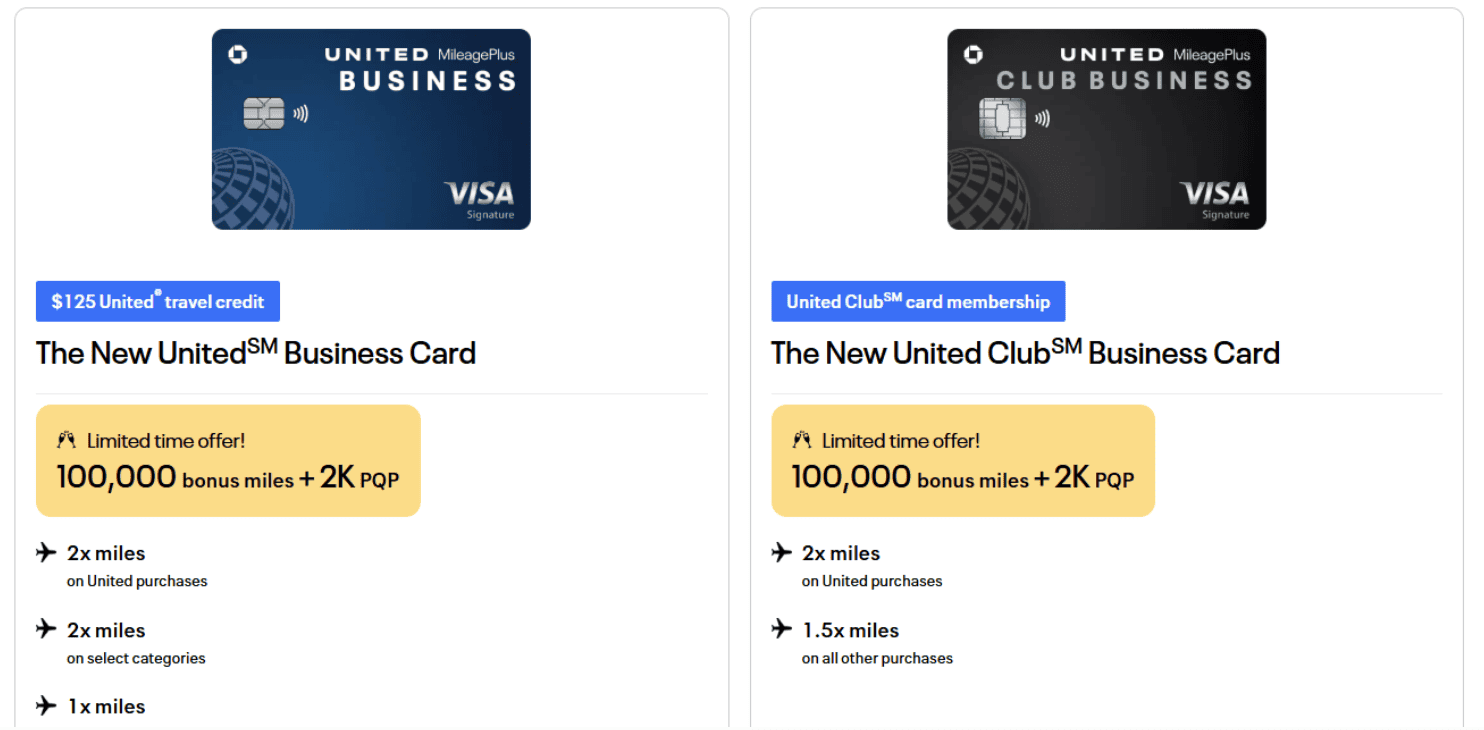
| United Business Card | $150 | 100,000 miles + 2,000 PQP (see page)* | 1st checked bag free; 2 United Club passes; $600+ partner credits (per Chase) | Yes (see terms) | 2 one-time passes/year |
| United Club Business Card | $695 | 100,000 miles + 2,000 PQP (see page)* | United Club membership; high PQP earning; premium United benefits | Yes (see terms) | United Club membership |
*Offers change frequently. Always verify the live offer and terms on the official Chase page before applying.
Card-by-Card: What You Get and Who Each Is For
United Gateway Card
Official page: link
Gateway is the “no annual fee” entry point. In 2026, it’s best viewed as a starter card for occasional United flyers who want a few perks without paying for them every year. The big thing to understand is that Gateway’s most meaningful benefits are earned, not automatic: Chase’s benefits page says you’ll unlock Cardmember Award Pricing after $10,000 in annual spend, and you can earn two checked bag certificates after hitting that same spend threshold.
Best for: someone who flies United a couple times a year, wants inflight savings, and can realistically put ~$10k/year on the card to unlock the “real” cardmember pricing features.
United Explorer Card
Official page: link
Explorer remains the easiest “value for most travelers” pick because it bundles the perks people actually notice: first checked bag free, priority boarding, and two United Club one-time passes each year.
Where Explorer gets more interesting in 2026 is the program context: United now gives eligible cardmembers better economics on both earning and award pricing starting April 2, 2026. So even if you’re not a hardcore United loyalist, Explorer can be a way to avoid being the “non-cardholder” MileagePlus customer who earns less and pays more in miles.
Best for: 2–6 United trips per year where you’ll use the bag/boarding perks, and you want access to cardmember award pricing without paying Club-card fees.
United Quest Card
Official page: link
Quest is positioned for people who fly United enough to care about status progress and recurring “rebates.” The current public offer includes a big mileage bonus plus 3,000 PQP, which is meaningful if you’re already aiming for Premier status.
Quest also adds a yearly Card Bonus PQP (1,000 PQP) starting in 2026, according to Chase’s “earn rewards” page—useful as a small head start, especially for folks hovering between tiers.
Best for: frequent United flyers who want PQP help and recurring statement-credit style value, but don’t want to pay for full Club membership.
United Club Infinite Card
Official page: link
This is the premium personal card for travelers who want lounge access as a default, not a once-in-a-while perk. Chase highlights the “status engine” side too: you earn 1 PQP per $15 up to 28,000 PQP/year, plus a 1,500 PQP annual head start (timing and conditions apply).
Best for: travelers who use United Club lounges enough that paying $695 makes sense, and/or those who want to drive a meaningful chunk of Premier qualification via spend.
United Business Card
Official page: link
The business card is ideal for owners who want United perks without going all-in on lounge membership. The current public offer includes 100,000 miles + 2,000 PQP, and Chase’s own marketing emphasizes recurring partner credits and two Club passes each year.
Best for: small business owners who fly United a few times a year, want a bag perk + occasional lounge access, and like earning miles from business spend.
United Club Business Card
Official page: link
This is the premium business alternative when your travel is frequent enough that lounge access needs to be built in. It carries the same public welcome-offer structure as the business card (miles + PQP), but the core value is the United Club membership itself.
Best for: owners who travel often (or have travelers on the team) and will reliably use Club access to justify the annual fee.
2026 Pro Tip: PlusPoints “Extra Earning” Now Counts Card PQP for 1K
If you’re (or will be) Premier 1K, there’s a new angle in 2026: every 3,000 PQP beyond 22,000, you earn 20 PlusPoints, and beginning Jan 1, 2026, eligible credit-card PQP counts toward that extra-PlusPoints track.
This doesn’t replace the normal PQP-from-spend caps in card terms, but it does mean 1K members can turn card PQP into more upgrade currency than before.
Which Card Should Most Readers Pick?
- Most occasional United flyers: Explorer (bags + boarding + lounge passes + 2026 cardmember perks)
- No annual fee, light commitment: Gateway (but only “complete” if you’ll hit the $10k spend triggers)
- Status-chasers without lounge membership: Quest
- United Club loyalists: Club Infinite (personal) or Club Business (business)
- Business spenders who want United perks: United Business
Conclusion
United’s lineup of co-branded credit cards caters to a wide range of travelers: from those who fly infrequently and are looking for an easy way to earn MileagePlus miles, to frequent United flyers seeking more substantial travel benefits. Choosing the right card depends less on the size of the sign-up bonus and more on how often you fly United, whether you check baggage, and how much you can benefit from perks like priority boarding, discounts on tickets with miles, cash back, or lounge access.
For many occasional travelers, entry-level or mid-tier cards may be sufficient to enhance the United travel experience without the burden of an annual fee. More frequent travelers may find that a premium card justifies its higher cost through access to the United Club, better travel perks, and added convenience throughout the journey. Meanwhile, business owners may prefer a card that combines MileagePlus rewards with spending categories that align with daily business expenses.
The key is not to get caught up in marketing slogans, but to evaluate each card based on your actual travel habits. If you fly United only a few times a year, paying for premium benefits you rarely use may not be worth it. But if you fly United regularly, redeem miles, or value airport comfort and travel protection, the right co-branded card can provide significant long-term benefits.


