
JetBlue Credit Cards (U.S.) – Guide to TrueBlue Сo-Branded Сards

PointsCrowd is a community-supported platform. When you apply for a credit card, make an order, or otherwise interact with the advertisers through the links on this page we may earn an affiliate commission. This helps us maintain and develop the platform further at no cost to you.
JetBlue has credit cards with Barclays that can really boost your TrueBlue points and get you cool travel extras. Whether you fly JetBlue every now and then or you’re a Mosaic member, there’s probably a JetBlue card that fits what you need. I’m going to talk about all the JetBlue credit cards – both personal and business ones – and go over their sign-up bonuses, how you earn points, Mosaic status perks, and travel protections. I will also look at the cards next to each other to help you pick the best JetBlue card for you.
JetBlue Credit Card Lineup Overview
JetBlue has four credit cards for its fans: three (3) for personal use and one for business. There’s the JetBlue Card (no yearly fee), the JetBlue Plus Card (a good mid-range option at $99 a year), the JetBlue Premier Card (the top-tier card at $499 a year), and the JetBlue Business Card ($99 a year). Each one has a different set of rewards and extras.
JetBlue Card (No Yearly Fee) – This one’s pretty simple, with no annual fee. It has a small sign-up bonus and earns points on everyday purchases. It’s good if you only fly JetBlue sometimes or just want to start earning TrueBlue points without paying a fee each year.
JetBlue Plus Card ($99 Fee) – This is a popular pick if you fly JetBlue a lot. It comes with a much bigger bonus, earns you more points on JetBlue purchases, and has useful perks like a free checked bag and extra points each year.
JetBlue Premier Card ($499 Fee) – This is JetBlue’s newest, most fancy card, meant for their most loyal flyers. It has the best bonus and benefits, like access to airport lounges, priority boarding, statement credits, and other high-end perks that might make the high fee worth it.
JetBlue Business Card ($99 Fee) – This one’s for small business owners. It’s a lot like the Plus card in what it offers. It gives you points for business spending (like on office supplies) and has perks like a free bag, yearly bonus points, and a bonus for adding employees as cardholders. It’s a great way to turn business expenses into TrueBlue rewards.
First, let’s get into it.to each card’s details, here’s a quick comparison table of the JetBlue credit cards at a glance:
JetBlue Credit Cards Comparison Table
| Advantage / Feature | JetBlue Card (No Fee) | JetBlue Plus Card ($99) | JetBlue Premier Card ($499) | JetBlue Business Card ($99) |
|---|---|---|---|---|
| Annual fee | $0 | $99 | $499 (+$150 per AU) | $99 |
| Typical welcome bonus* | 10k pts after $1k/90d | ~60k pts after $1k/90d | ~80k pts + 5 Tiles after $5k/90d | Up to ~60k pts (structure varies) |
| Earning on JetBlue purchases | 3× | 6× | 6× (incl. JetBlue Vacations & Paisly) | 6× |
| Earning at restaurants | 2× | 2× | 2× | 2× |
| Earning at grocery stores | 2× | 2× | 2× | — |
| Earning at office supply stores | — | — | — | 2× |
| Earning on Paisly by JetBlue | — | — | 6× | — |
| All other purchases | 1× | 1× | 1× | 1× |
| First checked bag free (you + up to 3 on same PNR) | No | Yes | Yes | Yes |
| Priority / Group A boarding (you + up to 4) | No | No | Yes | Yes |
| Inflight savings (food & drinks) | 50% off | 50% off | 50% off | 50% off |
| Anniversary bonus | — | 5,000 pts | 5,000 pts | 5,000 pts |
| 10% points back after award flight | No | Yes | Yes | Yes |
| $100 annual JetBlue Vacations credit | No | Yes | No (different credits) | Yes |
| $300 annual Paisly travel credits | No | No | Yes (6×$50 on ≥$250 purchases) | No |
| BlueHouse™ lounge access (JetBlue lounges) | No | No | Yes | No |
| Priority Pass™ Select membership | No | No | Yes | No |
| Global Entry / TSA Pre✓ credit | No | No | Up to $120 every 4 yrs | No |
| Tiles from card spend | Yes (1 Tile / $1,000) | Yes (1 Tile / $1,000) | Yes (1 Tile / $1,000) + 5 Tiles from welcome | Yes (1 Tile / $1,000) |
| Mosaic via heavy card spend | No explicit fast-track | Yes (historically ~$50k/yr) | Yes (issuer/program may grant via spend; confirm) | Yes (historically ~$50k/yr) |
| Free employee cards | — | — | — | Yes |
| Foreign transaction fees | None | None | None | None |
*Welcome offers and some perks change frequently and may be targeted. Always verify the live offer and terms on Barclays/JetBlue before applying.
JetBlue Card (No Annual Fee)
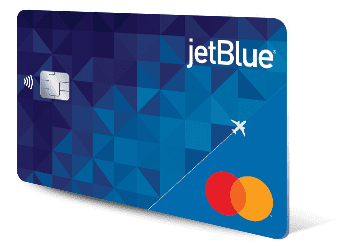
The JetBlue card is a pretty simple option without any yearly fee. If you’re new to JetBlue or just want to earn TrueBlue points on everyday buys without extra costs, this card is a good choice. Even though it doesn’t have a fee, you still get 3x points for every dollar spent on JetBlue flights, 2x points at restaurants and grocery stores, and 1x points on everything else.
The card usually has a sign-up bonus of about 10,000 TrueBlue points when you spend $1,000 in the first 90 days. Basically, it’s like getting free points for the stuff you normally buy.
The perks of the no-annual-fee JetBlue card are smaller, but they’re still there. You get 50% off in-flight purchases (like drinks and snacks) on JetBlue flights, which can make flying a bit nicer. But unlike the more expensive cards, you still have to pay for checked bags on JetBlue, which can cost at least $35 for the first bag. Also, this basic card doesn’t give you an annual bonus or Mosaic benefits. Think of this card as an easy way to earn points, perfect for travelers watching their budget or as a backup to other cards you have.
One great thing is that, like other airline cards, the JetBlue card doesn’t charge foreign transaction fees. You can use it overseas or for international buys without any extra costs, which is not common for cards with no fee. It’s a nice perk if you travel outside the country.
JetBlue Card – Learn More (Official Barclays page)
JetBlue Plus Card ($99 Annual Fee)
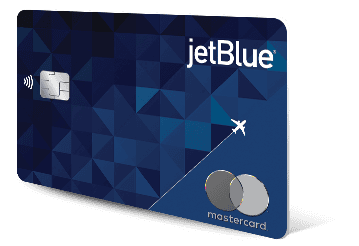
If you fly JetBlue a lot, the JetBlue Plus Card is a great deal. It has a $99 yearly fee, but the rewards and extras are worth it.
Good Welcome Bonus: You can get around 50,000–70,000 bonus points after spending a little bit (like 60,000 points after spending $1,000 in 90 days). This really gets you going toward your next free flight. Those 60,000 points could cover several trips in the US or even a fancy one-way business class flight sometimes.
You get 6 points for every $1 you spend on JetBlue flights. That’s double what the card with no fee gives you. You also get 2 points for every $1 at restaurants and grocery stores, and 1 point for everything else (just like the basic card). If JetBlue is your main airline, those points will add up fast with 6x on plane tickets.
Free Checked Bag: The Plus card saves you money each time you fly because you don’t have to pay for your first checked bag. This also applies to up to three (3) other people on your reservation. This one thing can easily make the $99 fee worth it if you take a few trips each year. Without the card, bags cost $35 each way per person.
Yearly Loyalty Bonus: Each year, cardholders get 5,000 bonus points. It’s a nice thank you that makes the fee less painful. Those 5,000 points are worth around $65 or more toward JetBlue flights, depending on how you use them.
Get 10% of Your Points Back: Every time you use your points for a JetBlue flight, you get 10% of those points back after you travel. For example, if you use 20,000 points, it only really costs you 18,000 because you get 2,000 back. This makes your points more valuable, which is great if you use points a lot.
$100 Vacation Credit: Every year, you can get a $100 credit when you buy a JetBlue Vacations package (flight + hotel) of $100 or more with your Plus card. JetBlue Vacations can already save you money, so this is a bonus for using your card on a package deal.
Fast Way to Get Mosaic Status: The Plus card can help you achieve JetBlue Mosaic elite status faster just by spending money. For every $1,000 you spend, you earn 1 tile.
Plus, the JetBlue Plus Card has travel protections and World Elite Mastercard extras that you’d expect from a travel card with a fee. This includes things like trip delay insurance (if your flight is delayed by 6 hours or more), baggage delay coverage, travel accident insurance, car rental coverage, purchase protection, and no foreign transaction fees.
In short, the Plus card is a good value for JetBlue fans. The fee is reasonable, and just one trip with checked bags and the anniversary points can pay for it. The big bonus for signing up and the 6x points earning on JetBlue make it easy to save up points for your next trip. If you like JetBlue, this is the card to get.
JetBlue Plus Card – Apply Now (60k+ bonus offer).
JetBlue Premier Card ($499 Annual Fee)
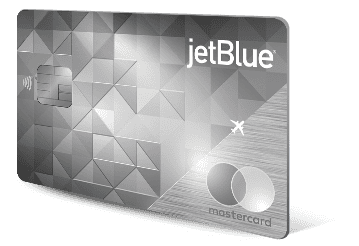
JetBlue’s Premier Card is their brand-new, top-level card that came out in early 2025, and it has a bunch of cool perks to go with its $499 yearly fee. This card is really for people who love JetBlue and those who want a great travel rewards card experience focused on all things JetBlue. So, here’s what you get for that price:
Welcome Offer: The Premier Card started with a bonus of 70,000 points + 5 Mosaic tiles if you spent $5,000 in 3 months. Now, the public offer is about 80,000 points (plus 5 tiles) for the same spending. That’s a really good bonus (worth over $1,000 toward JetBlue flights) that could pay for several trips. It also helps you get elite status faster by giving you 5 Tiles (10% of the way to Mosaic) right away.
JetBlue Lounge Access: If you have the Premier card, you can get into JetBlue’s new airport lounges for free (the first ones are opening at JFK Terminal 5 in late 2025, and Boston Logan is next) for you and one guest. This is a great perk since JetBlue’s lounges are supposed to be really nice, and access is usually only for Mosaic 4 elites or certain customers. With this card, you can chill in the lounge before your JetBlue flight.
Priority Pass Membership: Besides JetBlue’s own lounges, the Premier Card also comes with a Priority Pass Select membership. This gives you access to over 1,500 partner lounges (and airport perks like Minute Suites and credits at airport restaurants) around the world. If you travel internationally a lot or fly on airlines besides JetBlue, this gives you way more lounge options. (A membership like this usually costs around $429 a year if you buy it separately.)
More Points on Travel: With the Premier card, you get 6 points for every $1 you spend on JetBlue flights and Paisly purchases. Paisly is JetBlue’s booking site for hotels, cars, and stuff like that, and the Premier card is the only JetBlue card that gives you 6x points for those purchases. You also get 2x points at restaurants and grocery stores, and 1 point for other spending (just like the Plus card). The higher points earning on JetBlue and Paisly means you’ll get points just as fast as the Plus card for flights, and even faster if you book vacation packages or travel extras through JetBlue.
$300 in Travel Credits Each Year: To help make up for the fee, the card gives you up to $300 in statement credits for Paisly travel purchases each year. They give it to you as six $50 credits. Each time you book something on Paisly for $250 or more, you get $50 back (up to 6 times a year). If you use JetBlue’s Paisly for hotel stays, car rentals, or activities, you could get up to $300 back, which makes the card a lot cheaper.
Global Entry/TSA Pre✓ Credit: Every 4 years, you’ll get up to $120 in statement credit to cover the application fee for Global Entry or TSA PreCheck. This is a pretty common perk on premium travel cards – it saves you about $100 on the enrollment fee and makes travel easier with faster security or immigration lines.
JetBlue Perks: The Premier card comes with all the JetBlue benefits that the Plus card has, and even more. You still get a free first checked bag for you and 3 friends, a 5,000-point anniversary bonus each year, 10% of your points back when you redeem them, and 50% off inflight purchases. Plus, the Premier card adds Group A priority boarding on JetBlue flights for you and up to 4 travel buddies, meaning you’ll be among the first to board (right after Mosaic elites). This helps you get a spot for your bag in the overhead bin and makes boarding more relaxed. And once JetBlue’s Mint suite planes have their Even More Space seats and other upgrade perks tied to Mosaic status, cardholders in Group A will be ahead of everyone else.
Mosaic Status Boost: The Premier card doesn’t automatically give you Mosaic status, but it helps you get there faster. Like I said, you get 5 Tiles from the welcome offer to get you started. And, just like the Plus card, you’ll get 1 Tile for every $1,000 you spend on the card. (Even though some people thought the Premier card would earn tiles at a faster rate, JetBlue says it’s the same as the other cards.) Every purchase gets you closer to Mosaic. And if you spend $50,000, JetBlue will give you Mosaic 1 status, no matter which JetBlue card you have, including the Premier, Plus, and Business cards. Basically, the Premier card is a great tool you can use with flying to reach Mosaic, and it rewards you with those extra tiles and perks for being a loyal JetBlue customer.
Lastly, since it’s a high-end World Elite Mastercard, the JetBlue Premier Card comes with good travel protections and insurance benefits. This includes trip cancellation/interruption coverage (up to $5,000 per trip if something happens and you have to cancel your trip for covered reasons), trip delay coverage (like $300 back if your flight is really delayed), baggage delay insurance (to cover essentials if your bags are delayed), car rental collision damage waiver, extended warranty, purchase security, and more. These protections start when you use the card to pay for travel and can make you feel better on your trips. And of course, there are no foreign transaction fees on this card.
Who is the Premier Card for? It’s really for JetBlue fans who will use the lounge access and travel credits, and who want to get Mosaic status faster. If you often fly out of JetBlue’s JFK or Boston hubs (where the lounges will be) and can use the Paisly credits and other perks, the card might be worth it. If you count the $300 Paisly credit, the real fee could be as low as $199 if you use it all – and the lounge access alone could be worth that. But if you only travel on JetBlue sometimes or can’t use those extra benefits, the JetBlue Plus card at $99 might be a better deal.k.
JetBlue Premier Card – Learn More (Limited-time 80k bonus & lounge access).
JetBlue Business Card ($99 Annual Fee)
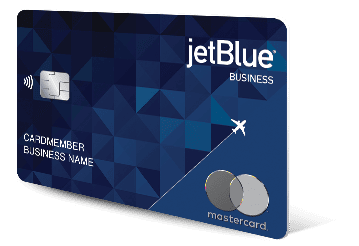
If you’re a small business owner, freelancer, or anyone who has business expenses, the JetBlue Business Card is a way to get JetBlue points for what you spend and enjoy perks like the Plus card.
It has a $99 yearly fee (which can be tax-deductible). This business version is a lot like the Plus card for individuals, but it has a few changes for business use:
Sign-Up Bonus: New cardholders can usually earn 50,000 bonus points after spending $4,000 in 3 months, plus another 10,000 points when you use an employee card in that time (60k total). That’s a lot – about the same as the Plus card’s bonus, but it’s set up to encourage you to add an employee card (which you can do for free).
Bonus Categories: You’ll get 6x points for every $1 you spend on JetBlue flights (just like the Plus/Premier cards) and 2x points for every $1 at restaurants (like the personal cards). But, instead of supermarkets, the business card gives you 2x points on purchases at office supply stores. This is helpful if you buy things like office supplies, electronics, or shipping from places like Staples or Office Depot. All other spending earns 1x per $1, as usual. This makes it as good as the Plus card for JetBlue flights and eating out, and even better if you spend a lot on office-related things.
JetBlue Travel Perks: The Business card gets you and up to 3 people on your reservation a free first checked bag (when you buy the tickets with the card). You and up to four people also get Group A boarding, which is the same as what Mosaic members get – good for business travelers who want to board sooner. You also get the usual 50% off on JetBlue inflight purchases, and a 5,000 point anniversary bonus each year. Plus, like the Plus/Premier cards, you get 10% of your points back when you use them for JetBlue, which makes them worth more.
Yearly $100 Credit: Similar to the Plus card’s vacation credit, the business card gives you a $100 credit each year after you buy a JetBlue Vacations package of $100 or more with the card. If you travel for work (or fun), booking a package and using this credit can bring down the card’s cost.
Employee Card Benefits: You can get free cards for your employees, and you can set spending limits for each one. This is good for small businesses. Your employees can earn JetBlue points on what they spend, you can set limits, and you can easily track expenses with one statement. All employee cards earn points for your TrueBlue account, which helps you get rewards faster. The sign-up bonus also makes it worth giving a card to an employee (10k bonus after they make their first purchase).
Mosaic Status: Spending on the business card also earns Tiles (1 for every $1,000), which go toward Mosaic tiers in the TrueBlue system, just like the personal cards. Spending $50,000 (equates to 50 tiles) on the JetBlue Business Card in a year will get you Mosaic 1 status for the rest of that year and the next. Not every business will spend that much, but it’s good to know that spending a lot can get you perks like extra points and free changes/cancellations on JetBlue flights.
The Business card also has no foreign transaction fees (helpful if your business takes you to other countries or if you import things) and has World Elite Mastercard travel protections similar to the Plus card. That means your JetBlue Business card can cover you with trip delay insurance, rental car insurance, purchase protection, and more – which gives you peace of mind when you travel.
Basically, the JetBlue Business Card is great for business owners who fly JetBlue or just want to collect TrueBlue points with their business expenses. You get almost all the same travel perks as the Plus card (free bag, anniversary points, etc.), and you get rewarded for your business spending. If you’ve been using a basic business credit card without airline rewards, switching to this card could be really worth it if you like to fly JetBlue. Many entrepreneurs even use this card with a personal JetBlue card.e.g. one spouse has the Plus, another has the Business) to double up on bonuses and benefits.
JetBlue Business Card – Learn More (60,000 points offer for businesses).
Which JetBlue Card Should You Choose?
Picking the best JetBlue card really depends on how often you fly with them, how much you care about the extra stuff, and if you own a business. Here’s a quick breakdown to help you decide:
If you only fly JetBlue now and then or don’t like fees: The basic JetBlue Card (the one with no annual fee) is a safe bet to earn some points. It’s good if you fly once or twice a year, or just want to keep your TrueBlue points active. JetBlue points don’t actually expire, but hey, building up your balance is always good. You won’t get any fancy extras, but you also won’t pay anything. It could also be a good backup card to use just for JetBlue tickets (you get 3x points), especially if you have another travel card you use for most things. Since it’s free, there’s no reason not to have it. Just remember, no free checked bags or shortcuts to Mosaic status – this card is all about earning points and getting discounts on board.
If you fly JetBlue a few times a year, the JetBlue Plus Card is probably your best deal. For $99 a year, you get a lot in return: a great sign-up bonus (worth way more than the fee), free checked bags (huge if you always check luggage or travel with family), a 5,000-point bonus each year, and better points on flights. It’s pretty simple: check a couple of bags on one round trip, and you’ve already saved money compared to paying for them. The ongoing rewards (6x points on flights, etc.) and the 10% points back when you use them make it easier to earn free flights. If you ever check bags or want those extra perks, the Plus card makes sense for anyone who isn’t completely new to JetBlue.
If you’re always on JetBlue or want the best perks, the JetBlue Premier Card is for those who really love the airline and travel a lot. It has benefits that are similar to fancy travel cards – like lounge access, Global Entry credit, and priority boarding – but it’s all focused on JetBlue. The $499 annual fee is pretty high, so you really need to use the lounge access and the $300 in credits to make it worth it. If you’re often at JFK or BOS and can use the lounges, and maybe book a few things through Paisly each year, you’ll get a lot of value from this card. It’s also the only way to get the full JetBlue VIP treatment, like boarding first, relaxing in lounges, and getting Mosaic status faster. Just know that many of its main travel protections and points are like the $99 Plus card. You’re really paying for the luxury extras. If those don’t excite you, the Plus card might be better. But for serious JetBlue fans who want everything the airline offers, the Premier Card is a unique option that can be really worth it.
If you have business expenses or a side gig: The JetBlue Business Card can be really rewarding. It basically takes the perks of the Plus card and lets you get them through your business. This is great if you’re a small business owner who flies JetBlue for work or fun. You can charge your business purchases and earn JetBlue points for yourself. Plus, you still get free checked bags and other travel perks. If you fly JetBlue a lot, you can use both your flying and spending to reach Mosaic status more easily. Also, the business card might not count toward your personal credit card limit on some credit scores, so it’s a smart way to get a big JetBlue bonus without messing up your personal credit too much. If you can apply with a business, this card is worth looking at alongside or instead of the Plus card. Some people even get both a personal and business JetBlue card to get the most bonuses – one for personal spending and one for business.
Bottom Line
If you pick the card that fits how often you fly and what you like to do, you’ll be on your way to free flights and more legroom before you know it. JetBlue points don’t expire, and there are no blackout dates. So, the bonus points you get now will be ready when you want to travel. Have a great trip, and enjoy the JetBlue perks on your next flight!


